 sinra
sinra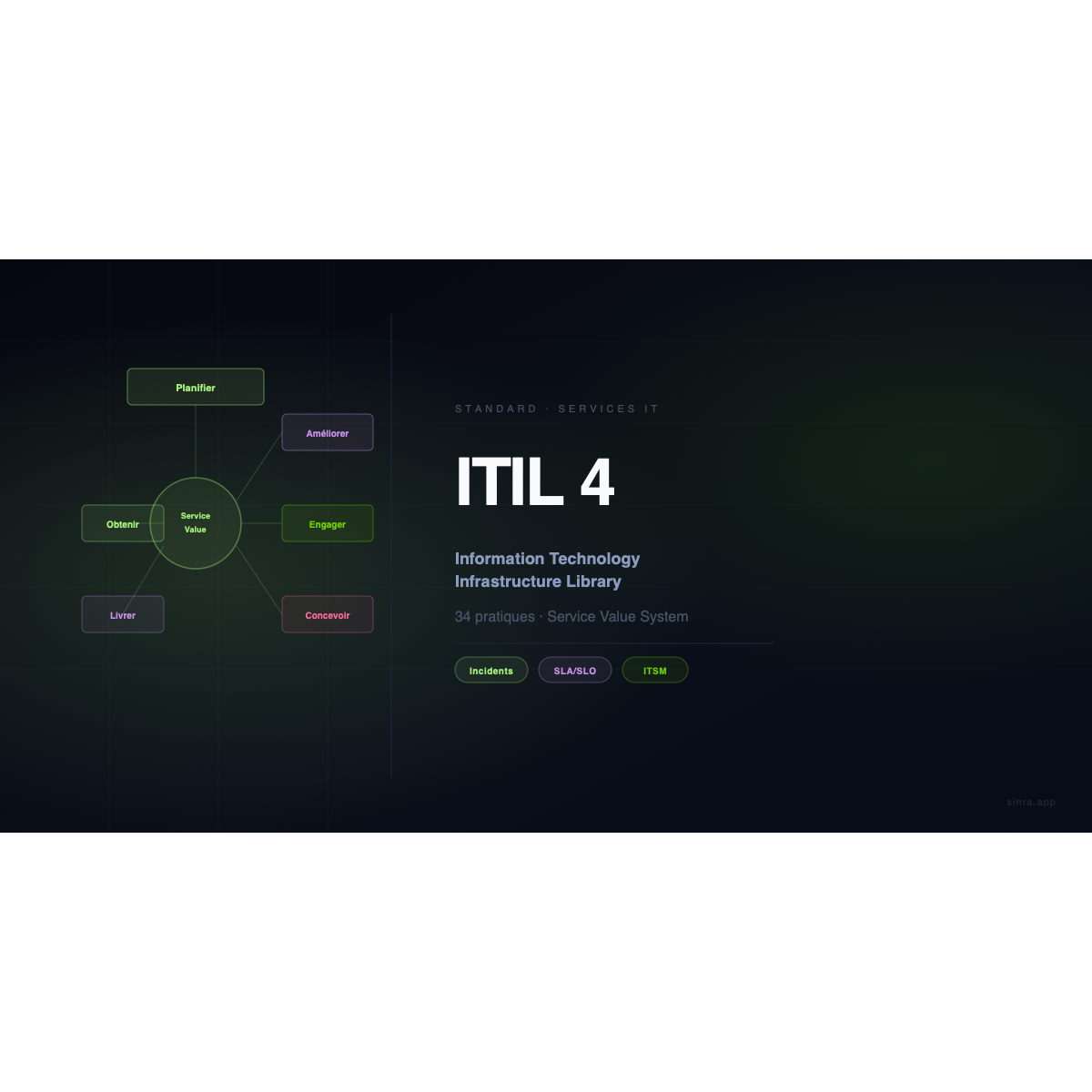
ITIL: The IT Service Management Framework That Delivers
ITIL 4 and the service value chain: how to structure IT management to create lasting value
What is ITIL?
ITIL (Information Technology Infrastructure Library) is a set of best practices for managing IT services (IT Service Management, ITSM). Originally developed by the British government in the 1980s, ITIL is today maintained by AXELOS and is the most widely adopted ITSM framework globally.
At its 4th edition since 2019, ITIL has evolved to integrate modern practices: DevOps, Agile, and cloud-based service approaches.
Why ITIL Matters to Developers
Many developers see ITIL as the exclusive territory of IT Ops teams. This is wrong. Here is why:
- When you deploy to production, you interact with change management processes
- When a bug impacts users, you trigger incident management processes
- When you design a new feature, you influence the service catalog
- When you document a process, you create knowledge management documents
ITIL provides the language and structures to manage these interactions professionally.
ITIL 4: The Service Value System
The 4th edition introduces the Service Value System (SVS), a model describing how organization components create value:
The 6 Service Value Chain Activities:
- Plan: ensure shared understanding of vision and direction
- Improve: improve products, services and practices
- Engage: understand stakeholder needs and maintain trust relationship
- Design and transition: design products and deploy them
- Obtain and build: ensure service components are available
- Deliver and support: deliver and maintain services
The 4 Dimensions of Service Management
ITIL 4 defines 4 dimensions that must be considered for any service:
- Organizations and people: roles, responsibilities, culture
- Information and technology: data, tools, automation
- Partners and suppliers: external dependencies
- Value flows and processes: workflows and value-creating processes
The 34 ITIL 4 Practices
ITIL 4 defines 34 practices distributed in 3 categories:
14 general management practices (e.g.: risk management, project management, continuous improvement)
17 service management practices (the best known):
- Incident management: quickly restore service after disruption
- Problem management: identify and eliminate root causes of recurring incidents
- Change management: control changes to minimize risks
- Service request management: handle user requests
- Service desk: single point of contact for users
- Service level management: define and monitor SLAs
3 technical management practices (infrastructure, software, deployment)
ITIL and Service Levels (SLA, SLO, SLI)
ITIL popularized SLAs (Service Level Agreements): formal contracts defining expected service level. In modern DevOps/SRE context, this has been enriched with:
- SLI (Service Level Indicators): concrete performance measures (availability, latency)
- SLO (Service Level Objectives): internal objectives more ambitious than external SLAs
- Error Budget: risk tolerance allowing innovation without compromising reliability
ITIL and Sinra
In teams delivering software products, ITIL and Sinra complement each other. Sinra’s issues can trace incidents, problems and service requests unified with development tasks. Releases correspond to regular deployment cycles.
Sinra’s pages can document the service catalog, runbooks and incident procedures, centralizing the ITIL knowledge base.
ITIL 4 vs Previous Versions
ITIL v3 was often criticized for excessive formalism, incompatible with agile methods. ITIL 4 corrected this:
- Native integration with DevOps, Agile and Lean
- Systemic approach (SVS) vs isolated processes
- Focus on value co-created with customers
- Implementation flexibility
Conclusion
ITIL remains essential for organizations managing IT services at scale. In 2026, ITIL 4 is modern enough to coexist with DevOps and agile practices. For teams wanting to professionalize their incident, problem and change management, ITIL provides proven vocabulary and practices.
Ready to Transform Your Project Management?
Apply these insights with Sinra - the unified platform for modern teams.
Start Free Trial