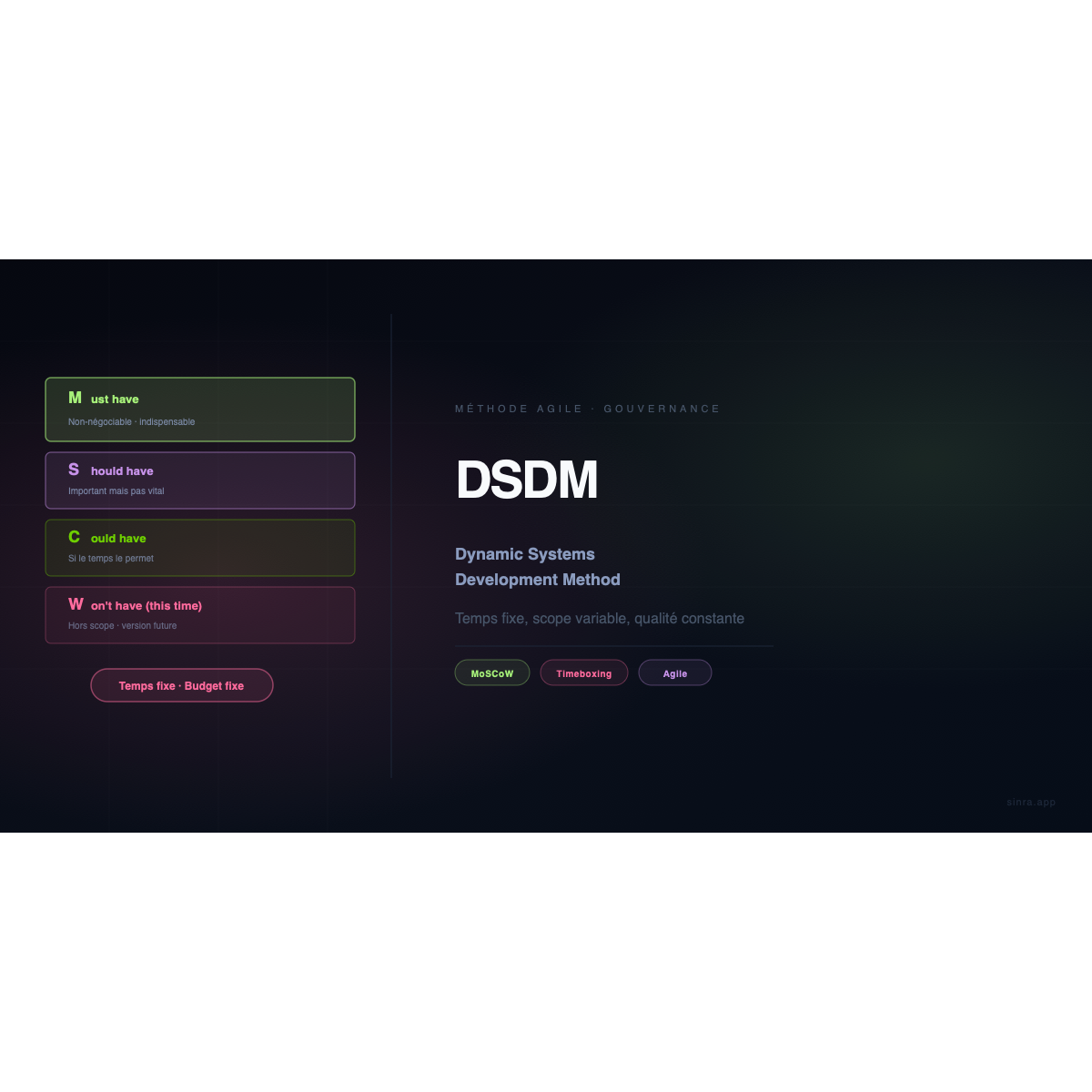
DSDM (Dynamic Systems Development Method): Agility With Guardrails
DSDM reverses traditional logic: instead of fixing scope and varying time, it fixes time and budget, and lets scope adapt to reality. A pragmatic and underestimated approach.
Learn modern project management strategies, release planning, QA integration, and team scaling. Insights for engineering leaders and project managers.

DSDM reverses traditional logic: instead of fixing scope and varying time, it fixes time and budget, and lets scope adapt to reality. A pragmatic and underestimated approach.

The Unified Process is not a method but a conceptual framework. Understanding UP means understanding the foundation common to RUP, OpenUP and many other derivatives. Essential for any serious engineering team.

RUP is not a fixed method but a customizable framework. Its strength is structured flexibility: it offers a complete framework each organization can customize to its needs.

RAD revolutionized development in the 1990s by proving you could deliver real software in weeks rather than years. Its principles continue to influence modern development methods.

The Y-cycle recognizes that functional and architectural concerns in a system don't develop the same way or at the same pace. Its fork structure allows managing them separately before integration.

The X-model pushes V-Model logic even further by integrating multiple system abstraction levels into a single methodological framework. An approach for multi-layer and multi-system projects.

The W-model goes further than the V-Model by making testing activities parallel to development from day one. Result: fewer defects, earlier detection, superior quality.

KISS: Keep It Simple, Stupid. The golden principle of computing. And also the first one that companies abandon once they exceed ten employees.

The spiral model does not just deliver a product. It actively manages risks at each cycle, evolving progressively toward a complete system. An underestimated approach for high-uncertainty projects.

Waterfall dominated the industry for decades. Understanding its mechanisms is understanding why modern teams still seek to combine it with other approaches.